
The short answer
A garage door that isn't wind-rated, properly braced, or running smoothly on its tracks is the single most likely part of your house to fail in a storm. Once it fails, wind gets inside the garage, pushes up on the roof from underneath, and can take the rest of the structure with it. The fix is to treat the door like structural armor, not just an entry point: check the panels, tracks, springs, and opener now, before the next system builds in the Gulf.
Why the Garage Door Fails Before the Walls Do
Exterior walls are solid and tied into the frame of the house. A garage door is a large moving panel held in place mostly by its tracks, rollers, and the strength of the springs and opener. When sustained wind or a gust hits a standard door that isn't built for wind load, the panels can bow, the rollers can pop out of the track, or the whole door can buckle inward. Once that happens, wind pressure inside the garage pushes outward on the walls and upward on the roof decking — the opposite of what the structure is designed to resist. This is why building codes in wind-prone areas call for wind-load-rated garage doors on new installs: the door isn't just protecting your car, it's protecting the envelope of the whole house.
Coastal and near-coastal homes have an added complication. Salt air accelerates rust on hinges, tracks, and spring coils, and humidity swings cause wood and even some steel-reinforced panels to swell or warp slightly. A door that looked fine in the spring can develop hidden weak points by the time storm season peaks in the fall.
Signs Your Door Won't Hold Up
- Visible rust or pitting on hinges, tracks, or the spring itself
- Panels that look slightly bowed, warped, or don't sit flush when closed
- Rollers that are cracked, worn, or jump the track when the door moves
- A door that feels heavy, slow, or uneven when opening — a sign the springs are losing tension
- Gaps at the bottom or sides where you can see daylight or feel airflow
- An opener that struggles, reverses unexpectedly, or has no battery backup
Any one of these is a reason to get the door inspected before wind picks up, not after.
Steps to Take Before the Next Storm System
- Check for a wind-load rating. If you don't know whether your current door is rated for wind pressure, that's worth confirming. Doors installed without this rating are more prone to buckling under sustained gusts.
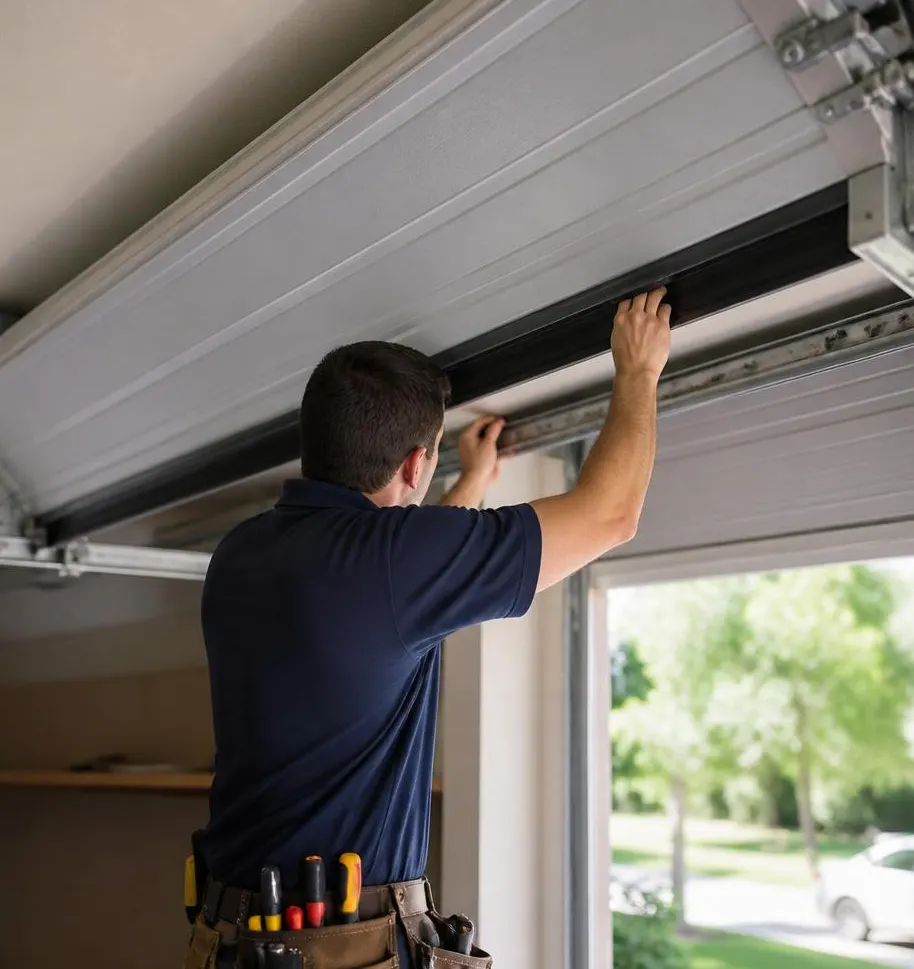
- Inspect and tighten hardware. Loose hinges, bolts, or track brackets reduce the door's ability to resist pressure. A tune-up should include checking every connection point, not just the obvious ones.
- Address rust and corrosion now. Salt air works fast on exposed metal. Rust weakens rollers, tracks, and springs exactly where you need strength most.
- Make sure rollers and tracks move freely. A door that binds or drags under normal conditions will fail faster under wind load. Lubrication and alignment matter here.
- Consider a horizontal or vertical brace kit for doors that aren't natively wind-rated, especially on older garages built before current wind-load expectations.
- Test the opener's backup battery if you have one, since power outages are common during and after storms and you may need to close the door manually or by battery power.
- Clear and check weatherstripping at the bottom and sides — it keeps wind-driven rain out during the frequent afternoon downpours this time of year, not just during named storms.
After the Storm Passes
Walk the door before you use it. Look for new gaps between panels, listen for grinding or scraping that wasn't there before, and check whether the door still opens and closes evenly. Heavy rain and sudden pressure changes can shift a door's alignment even if nothing looks obviously broken. If the door came off its track or a spring snapped under the strain, don't force it — a door under spring tension can cause serious injury if handled incorrectly.
When to Call Venice Garage Door Repair
If you've spotted rust, a sagging or bowed panel, a door that's come off-track, or you're not sure your current door meets wind-load expectations for this area, it's worth having it looked at before the next system forms. We handle Garage Door Off-Track Repair for doors knocked loose by wind or debris, and Garage Door Maintenance & Tune-Up service to catch corrosion, worn rollers, and loose hardware before they become storm-season failures. For homes that need a genuine upgrade, we also install wind-load-rated doors built for Gulf Coast conditions.
If you're in Venice, Nokomis, North Port, Englewood, Osprey, Sarasota, Laurel, or South Sarasota and want your garage door storm-ready before the next forecast turns ugly, call Venice Garage Door Repair today.