
What It Costs to Skip This
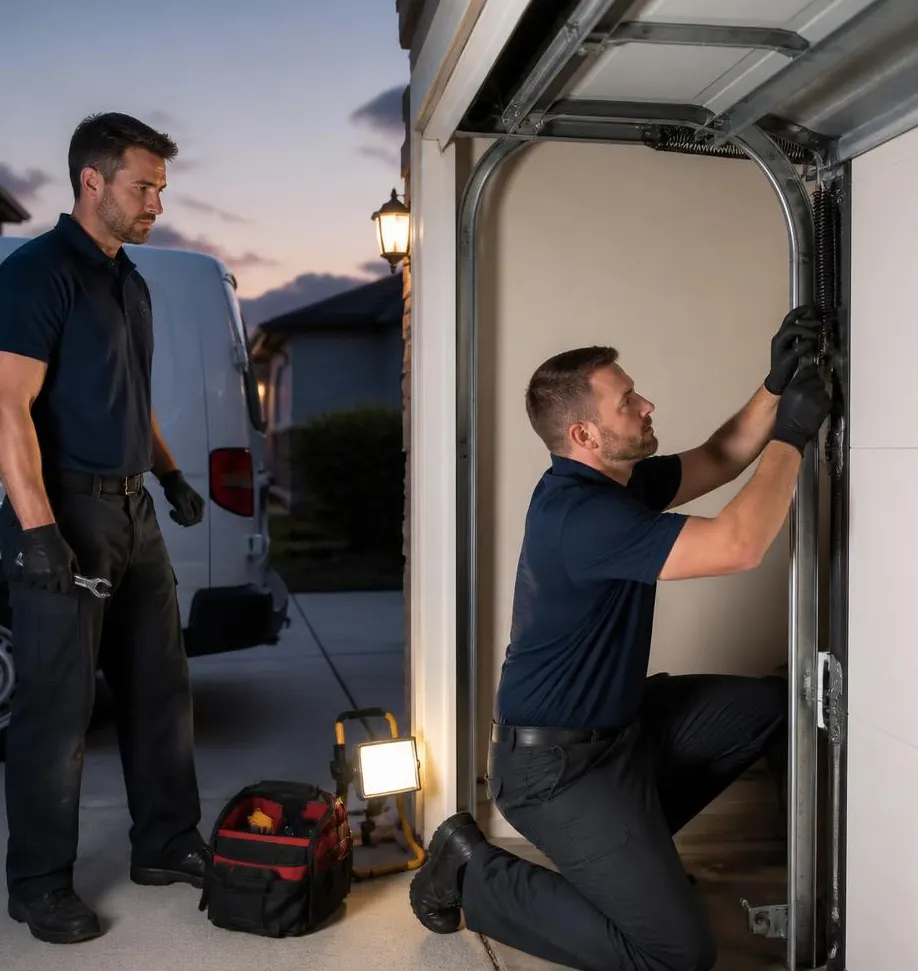
Put this off and the most common outcome isn't a dramatic failure — it's a door that works fine in September and then, almost overnight in November or December, starts binding, grinding, or refusing to close all the way. A spring that's been quietly corroding from salt air finally snaps, usually while the door is halfway up. An opener that's been drawing extra power to force a swollen, rust-stiffened door through its tracks burns out early. If you're a seasonal homeowner who's about to leave the house closed up for weeks, or about to welcome snowbirds back into a second home, a garage door that fails while no one's watching it closely is a real security gap, not just an inconvenience. None of this is expensive to prevent. It gets expensive once it's a 9pm service call.
Finish What Hurricane Season Started
Storm season in this part of Florida doesn't fully wrap up until the end of November, so your door has likely spent the last few months absorbing wind-load stress, driving rain, and humidity swings. Before you move into cooler, drier weather, walk the door and look for:
- Panels that are dented, bowed, or sitting slightly off-alignment from wind gusts
- Tracks that have shifted — even a quarter-inch of misalignment can throw a door off-track once temperatures and humidity change
- Weatherstripping along the bottom and sides that's cracked, torn, or pulling away from months of expansion and contraction
- Visible rust on hinges, rollers, or the spring itself, especially if you're close enough to the coast to get regular salt air
Catching this now, while you can still open the door easily and look things over, is far easier than diagnosing it after the door seizes up.
Hardware Doesn't Like the Humidity Swing
Garage door hardware in this climate lives a rough life: it swells in humid, afternoon-downpour weather, then contracts as the air dries out heading into the cooler months. That expansion-contraction cycle is exactly what loosens bolts, wears down roller bearings, and stresses torsion springs. A few things worth doing before winter sets in:
- Lubricate moving parts — hinges, rollers, and the torsion spring itself — with a garage-door-specific lubricant, not household oil, which attracts grit and breaks down faster in humid air.
- Tighten hardware that's visibly loose. Track brackets and hinge bolts work themselves loose from vibration and humidity cycling faster here than in drier climates.
- Check the spring for sagging or visible rust pitting. Springs are rated for a certain number of cycles, and repeated humidity swings shorten that lifespan. If yours looks stretched or corroded, it's close to the end, not the beginning, of its life.
Springs are also under tension and genuinely dangerous to replace yourself — this is one job worth handing off rather than tackling with a ladder and a YouTube video.
Seals and Weatherstripping
Wood and rubber seals that swelled during the wet season often shrink back once drier air moves in, leaving small gaps along the bottom and sides of the door. Those gaps let in cooler drafts on the rare cold snaps this area gets, but more importantly, they let in moisture, pests, and dust year-round. Replacing worn weatherstripping is inexpensive — typically in the range of what you'd pay for a basic hardware store repair kit — and it's one of the best returns on effort for the season.
Opener and Safety Sensors
Power surges from storm season can quietly damage opener circuit boards even if the door still technically works. Before you rely on the opener daily again — or before you leave town for weeks and expect it to work flawlessly when you're not there — test the auto-reverse safety sensors, check the remote and keypad batteries, and confirm the battery backup (if you have one) actually holds a charge. This matters more than usual here, where outages during storms are common and a dead backup means a stuck door at the worst time.
When to Call Venice Garage Door Repair
If your door is sticking, grinding, or won't fully close, if you spot rust or sagging on the spring, or if the door came through storm season slightly off-track, that's the point to call us rather than keep adjusting it yourself. We handle Garage Door Spring Replacement for springs that have corroded or lost tension, and our Garage Door Maintenance & Tune-Up service covers exactly this kind of seasonal check — hardware, alignment, lubrication, and sensor testing — in one visit. It's the most efficient way to head into the season without surprises.
If you're in Venice, Nokomis, North Port, Englewood, Osprey, Sarasota, Laurel, or South Sarasota and your garage door needs a seasonal once-over, call Venice Garage Door Repair today and get it handled before winter guests — or winter weather — arrive.